A transsexual woman's perspective
GUEST COLUMN / Inclusion isn't inclusion if it stops at the bedroom door
Aleisha Cuff / Vancouver / Thursday, January 01, 2009
Share |

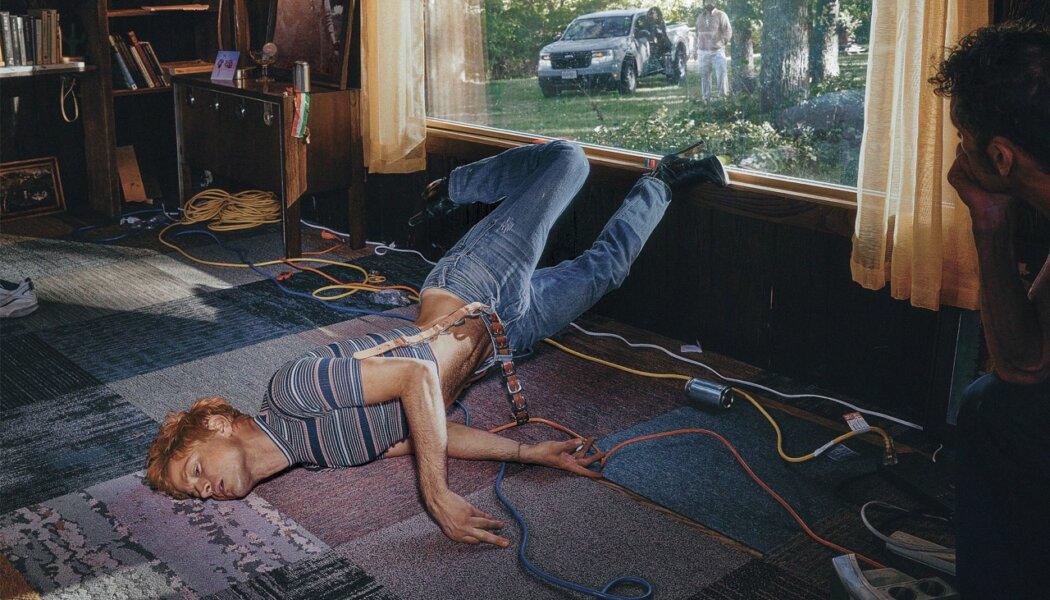
I'll admit I winced when someone handed me a copy of the Dec 4 edition of Xtra West.  Two men in bed, not exactly groundbreaking news for an LGBT paper.

Then I saw the title of the piece splashed across the photo: "Shifting Desires: How Trans People are Reshaping Same-Sex Attractions." I winced again.

Truth be told I don't read Xtra West very often. That's not meant as a singular slight against the paper, I just don't do many LGBT community things anymore. I don't go to Pride parades, I haven't been to a bar in years, and I rarely go to any other mainstream LGBT event.

The reason I wince, and why I don't do these things anymore, is because I am a queer transsexual woman, and being a queer transsexual woman in Vancouver is, to put it mildly as I can, a difficult proposition.

There have been a great many words written about Kimberly Nixon v. Vancouver Rape Relief Society, and I don't have much to add to that. To begin a discussion of the relationship of trans women and Vancouver without acknowledging it, though, would be remiss.

The ripples from the ruling in that case (where a BC Supreme Court judge sided with Rape Relief that a trans woman is not a woman) are still being felt, and the implications for trans people and all minorities are still yet to be fully realized.

But I don't want to debate a court case, and I don't want to debate my identity. Having spent years involved in the trenches of these discussions I'm tired, and I don't think I'm going to change anyone's bias based on a good argument anyway.

I think, however, those biases will have a harder time if faced with stories about people. It's a great deal harder to hold essentialist beliefs about someone you know.

My path to being queer was in many ways extremely similar to the cisgendered women I've spoken to (cisgendered means those of you who aren't transsexuals. It's a mouthful, sure, but so was heterosexual when it started being used). I'd spent a number of years dating men, and was in a long-term relationship with a man when I realized the people I kept falling in love with were women.

With this realization came a range of emotions, but ultimately the strongest of these was trepidation —and the excitement of coming out and finding this part of myself was tempered with fear.

Although I'd been living in the straight world, I knew that Nancy Burkholder had been escorted off the land at the Michigan Womyn's Music Festival in 1991 for being transsexual, and I had heard from queer trans women I knew that I should brace myself for shunning, exclusion and anger. 

Whipping Girl, by American writer, trans activist and biologist Julia Serano, reads like a primer for a feminism that includes trans women. Her primary thesis deals with what she calls trans misogyny —a kind of misogyny perpetrated on trans women, but having far deeper implications. Serano argues, and I'd agree, that much of the anger and fear of trans women speaks to a deeper misogyny that is somehow legitimized when it is aimed at trans women.

As a transsexual woman myself, especially one who considers herself a feminist, I often feel scrutinized by cisgendered feminists in ways that other women are not.

Trans women are in a tremendously difficult position: if we're too feminine we're acting as sexist caricatures, whereas if we're too masculine that just proves we're not women in the first place. If we speak up, we're aggressively grabbing the microphone, and if we don't we're supporting the premise that women are meek and submissive.

The most troubling part, though, is that often in the middle of a screed against trans women the 'trans' part begins to feel secondary, and the focus of the anger becomes femaleness or femininity itself.

It is of great concern to me, then, and should be of concern to all women that the community in which I have experienced the most anger and bigotry for being a transsexual woman has been the community of cisgendered queer women.

Eventually I found a community of my own, although it was largely made up of people far from Vancouver.

In blogs and on message boards I began to find other trans women who felt like I did, frustrated with being excluded from the community of queer women. It was a place in which I could discover myself and begin to tell my story in ways I could feel proud of, the place I had hoped the LGBT community would be.

I didn't just find other trans women, I found a host of queers who had become disaffected in one way or another with LGBT.

Most importantly, I found a place where I could meet women and it didn't matter if I was trans or not, or if they were trans or not, we just got up to what queer women will get up to.

How often we're seen as desirable is a fairly accurate measure of a community's relationship with trans people. Inclusion isn't inclusion if it stops at the bedroom door.

There was a time when I would have been glad to see Vancouver in my rearview mirror, but I've come to realize that I have a life here with some great people. This gives me hope for a community, and I don't want to be run out of town because there's some work to be done.

I recently saw comedian Jon Stewart take on conservative Mike Huckabee over gay marriage in America. "It's a travesty," Stewart said, "that people have forced someone who is gay to have to make their case that they deserve the same basic rights as someone else."

That the queer community has done the same thing to some of its own members is a travesty, too, but the thing that gives me the energy to reach out now is that, unlike the conservatives, we know better.

Despite the rocky road I've had with being queer, I've met enough fantastic people to know we're capable of great things, and this is as good a place to start as any.


Share |


Reader Comments


queer and trans... sometimes but not always.
I appreciate Aleisha Cuff's commentary on transwomen within the context of the larger lgbt community (if such a thing exists). My own experience (as a transwoman) is one of mostly polite pc tolerance but very rarely anything beyond that. The talk was talked, but the walk... not so much. Sadly, I find this as much in the queer community (in SF) as in the traditional lesbian/gay community. If you identify as genderqueer or a trans queer dyke... you're loved. But loved as a symbol, not as a womyn. If, however, you experience yourself as a woman who happens to be attracted to men, more often than not, you're considered self-delusional, a reactionary and a false representative of the patriarchy. In either case, I find transwoman are highly objectified as either symbols of rebellion/transgression or as establishment tools of male power. In truth, neither crude projection onto us is correct. I wish nothing but the best for how people need to identify themselves, be it GQ, fluid, two-spirit or gender rebel, but I don't appreciate having assumptions made about me based on my view of myself or to whom I happen to be attracted. Sorry, but the queer community has a long way to go before it not only understands us, but honors and includes us as women.
gina morvay, San Francisco California
01/01/09 1:50 PM EST
Report this comment to moderator.
crucial clarification
As a trans woman who moving to Vancouver with her trans woman partner in a couple months time, I found your article and some of the discussion in previous threads around the 'Evolution of Desire' piece about what it's like being a trans woman in Vancouver - very interesting. A bit discouraging, but there you go. The real reason I am posting this comment is to flag out one small but critical portion of your article, where you stated in reference to the Nixon v. Rape Relief series of decisions: 'The ripples from the ruling in that case (where a BC Supreme Court judge sided with Rape Relief that a trans woman is not a woman) are still being felt, and the implications for trans people and all minorities are still yet to be fully realized.' I agree that the implications are still being felt and not yet fully realized. That's why it's so important (to me) that I post this note of clarification. To wit: NO court or tribunal found at any point whatsoever that Kim Nixon was 'not a woman'. Quite the contrary occurred. Both the BCSC and the BCCA, while killing the BCHRT's decision in Nixon's favour, very clearly established that Nixon was in law and in fact a WOMAN. There is no doubt about this, and I just hate the thought of any trans woman (or other trans person) believing and internalizing that the take-away message from the cases was that Nixon was found by the courts not to be a woman. SHE WAS FOUND TO BE A WOMAN. She was found to be a woman who faced discrimination, to boot. But Rape Relief was found to be entitled to choose WHICH TYPES of women it would train as counsellors. What they found is that RR was entitled to choose not to train women who had not lived their entire lives as female. They discrminated by doing so, but they discriminated in a manner permissible under a specific provision of BC's Human Right's Code. Would the result be the same if RR had tried to exclude another sub-group, e.g. women of colour? I would hope not! But trans women? Sure
Shannon Blatt, Ottawa Ontario
01/02/09 1:37 PM EST
Report this comment to moderator.
Another clarification
It's good to see articles like this. I'd like to point out one error in the statement, 'cisgendered means those of you who aren't transsexuals.' 'Cisgendered' actually refers to people who are not *transgendered.* 'Cissexed' refers to people who are not transsexual. The term 'Transgendered' includes transsexuals, but also includes a lot of other people. Most genderqueers, drag performers, butch women, nelly men, bigendered people, androgynous people, cross-dressers, and people with an identity other than 'man' or 'woman' are cissexed (not transsexual) but are definitely transgendered. It might sound like nitpicking, but these are important words to know. They make power relations visible, and hopefully show that there's a long list of people who benefit form trans-acceptance. Otherwise, awesome article.
Amy Fox (Treasurer, Trans Alliance Society), Vancouver BC
01/03/09 3:34 PM EST
Report this comment to moderator.
opportunity lost
One thing that did happen when, on February 1, 2007, when the Supreme Court of Canada declared it would not hear the Nixon Appeal, the first case concerning a transsexual person to reach it--there would be no opportunity for the court to take judicial notice that gender identity, at least, was an analogous ground to those in Chapter 15 of the Charter, as it had found for sexual orientation about 10 years ago. Another interesting article in Xtra West--another perspective that remains alien to Capital Xtra.
Jessica Freedman, Ottawa Ontario
01/03/09 7:55 PM EST
Report this comment to moderator.
On a few points...
As author of the column, I'd like to respond to a few points: Amy, apologies on the cisgendered/transsexual point, that is absolutely correct. I'd written this piece fairly quickly and under a deadline, so it wasn't until it had gone to print that I noticed that small yet significant error. I'll try to address that should I get the chance. Shannon, thank you for the clarification. That is an important nuance to the meaning of the ruling, and I appreciate that you pointed it out.
Aleisha Cuff, Vancouver British Columbia
01/04/09 7:11 PM EST
Report this comment to moderator.
On Human Rights
"She was found to be a woman who faced discrimination, to boot. But Rape Relief was found to be entitled to choose WHICH TYPES of women it would train as counsellors. What they found is that RR was entitled to choose not to train women who had not lived their entire lives as female. They discrminated by doing so, but they discriminated in a manner permissible under a specific provision of BC's Human Right's Code. Would the result be the same if RR had tried to exclude another sub-group, e.g. women of colour? I would hope not! But trans women? Sure" Shannon, it seems that if it's legal for them to discriminate against a transsexual woman due to a specific Human Rights Law, then this must mean that the courts have found that while Ms. Nixon is a woman, she's not quite HUMAN, since they are aimed against her, not for her.
Alison, Sunnyvale CA
02/03/09 2:51 AM EST
Report this comment to moderator.
well put
I agree with your take Alison. I don't see it as remotely likely that the court would have held as it did had it been a sub-group of women properly considered 'human' whose dignity was in issue. Just to clarify, as my original comment was cut off after the word 'sure'...it was meant to conclude this way: Sure...we're just disposable gender trash, not people.'
Shannon Blatt, Ottawa Ontario
02/03/09 8:34 AM EST
Report this comment to moderator.